
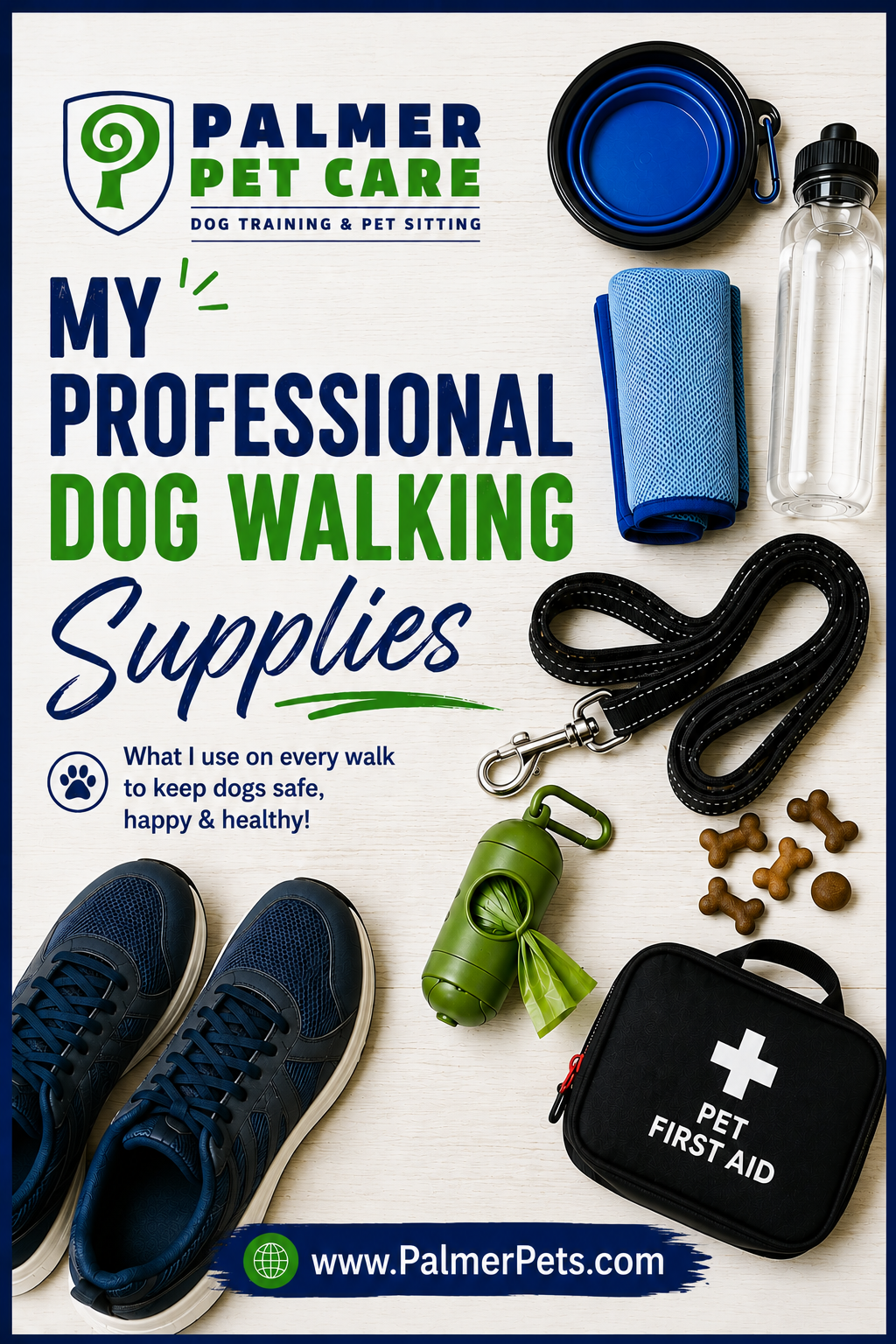

Dog walking might look simple from the outside: grab a leash, put on your shoes, and head out the door. But when you’re responsible for someone else’s dog, the walking supplies you choose can make a significant difference in safety, comfort, and preparedness.
As a professional dog walker—and someone with years of veterinary and dog-training experience—I’m pretty intentional about what comes along on a walk with me. Some supplies help keep dogs comfortable during our Central Texas weather, while others help me maintain safe control or respond if something unexpected happens.
Here are some of the walking supplies I rely on and, more importantly, why I choose them.
1. Walking Supplies Start With the Right Leash
The leash is arguably the most important piece of equipment on any dog walk.
For routine walks, I prefer a traditional fixed-length leash rather than a retractable leash. A standard leash gives me more predictable control of the dog and makes it easier to respond quickly if we encounter traffic, another animal, wildlife, or an unexpected distraction.
The exact leash and setup can vary depending on the individual dog. Size, strength, leash manners, and the equipment the owner normally uses all matter.
Whenever possible, I also want a dog’s walking equipment to be comfortable and properly fitted. Safety shouldn’t require sacrificing comfort.
2. Good Athletic Shoes Are Part of My Walking Supplies, Too
Not every piece of dog-walking equipment is worn by the dog!
My footwear is an important part of my walking supplies because I need to be able to safely handle dogs over a variety of distances and surfaces.
I choose comfortable, closed-toe athletic shoes for two primary reasons:
Safety: Closed toes provide more protection if a dog accidentally steps on my foot, the leash gets tangled, or we encounter uneven terrain.
Comfort: A day of dog walking can add up to a lot of mileage. Supportive athletic shoes allow me to walk comfortably without sacrificing stability or traction.
Flip-flops might be fine for walking to the mailbox. They aren’t my choice when I’m responsible for safely handling someone else’s dog!
3. Water and a Travel Bowl
Central Texas weather makes hydration an especially important part of my walking supplies.
I carry bottled water and a portable travel bowl, particularly during warmer weather. Having water readily available means I don’t have to depend on finding a water source along our route.
Of course, carrying water doesn’t make it safe to exercise a dog indefinitely in high temperatures.
During excessive heat, I may shorten or modify a walk to protect the dog’s health. You can read more about how I handle hot-weather walks in How Palmer Pet Care Keeps Dogs Safe During Texas Summer Walks.
4. Cool, Damp Towels for Hot Weather
During warmer months, I also bring cool, damp towels.
They’re an easy way to provide some additional cooling support when needed, particularly after returning from a walk.
More importantly, I continually watch the dog throughout the walk. Equipment is useful, but it doesn’t replace recognizing when a dog is becoming too hot and ending outdoor activity before the situation becomes dangerous.
5. A Pet First-Aid Kit
One of the walking supplies I hope I don’t need is my pet first-aid kit.
Dogs can scrape a paw, step on something sharp, get bitten or stung, or experience another unexpected problem while we’re away from home.
A first-aid kit doesn’t replace veterinary treatment, but it gives me basic supplies to respond to minor injuries or help stabilize a situation while appropriate veterinary care is arranged.
My veterinary background is especially valuable here. After spending many years working in veterinary medicine, including emergency care, I’m familiar with recognizing when something has moved beyond a minor problem and needs professional medical attention.
6. Waste Bags—Always!
They’re certainly not the most exciting walking supplies, but they’re among the most frequently used.
I always bring waste bags, and I prefer to carry extras. Running out halfway through a walk isn’t a situation I want to find myself in!
Cleaning up after dogs isn’t just courteous to neighbors. It also helps keep shared sidewalks, trails, parks, and neighborhoods cleaner for everyone.
7. Treats Can Be Walking Supplies, Too
Because of my dog-training background, I also recognize that an ordinary walk can offer plenty of opportunities to reinforce good behavior.
When appropriate for the individual dog—and with the pet parent’s permission—treats can be useful for rewarding behaviors such as checking in with me, walking politely, or calmly disengaging from a distraction.
This ties directly into something I’ve discussed before: your dog’s training threshold. When a dog encounters something exciting or concerning, maintaining enough distance for them to remain calm and engaged can turn an everyday walk into an opportunity to practice good choices.
You can learn more in my article What Is a “Training Threshold”?
Why Professional Walking Supplies Matter
Ultimately, there isn’t one magic piece of equipment that makes a dog walk safe.
It’s the combination of appropriate walking supplies, experience, observation, and good judgment that matters.
Every dog is different. A young puppy, an energetic adult dog, a senior, and a nervous or reactive dog may all require slightly different considerations on a walk.
My goal isn’t simply to get a certain number of minutes or miles completed. It’s to give each dog a safe, enjoyable outing that meets their needs that day.
Ready to Schedule a Dog Walk?
If your dog could use some extra exercise, enrichment, or a midday break, Palmer Pet Care offers professional dog walking with safety and individualized care at the forefront.